
Sikh Wedding in Marrakech: Destination Anand Karaj Ceremonies
The celebration of Sikh nuptials is a joyful explosion of Sikh culture and beliefs, going far beyond the union of two individuals.
At the heart of it all is the Anand Karaj, a deeply spiritual and uplifting ceremony performed in the presence of the Guru Granth Sahib, the Sikh holy scripture.
From the lively Baraat procession, filled with music and dancing, to the vibrant Mehndi rituals where laughter and colors abound, every tradition weaves a joyous bond between the couple and their community.
A skilled wedding planner ensures that every detail sparkles, helping families fully immerse themselves in the happiness of the occasion. For an Anand Karaj held abroad, a wedding planner in Marrakech coordinates the gurdwara arrangements alongside everything else.
These celebrations are a beautiful testament to the Sikh love for family, spirituality, and collective joy, a true festival of love and unity
Pre-wedding rituals
Sikh wedding ceremonies are rich with pre-wedding rituals that are deeply symbolic and full of cultural significance.
Each ritual is designed to prepare the bride and groom physically and spiritually for their union, and to foster a bond between the two families. Here’s an overview of some key Sikh wedding preparatory ceremonies:
Kurmai (Engagement)
The Kurmai is the formal engagement ceremony and often marks the official start of the wedding celebrations.
It is usually conducted at the groom’s house or a Gurdwara (Sikh temple, the sacred place in the Gurdwara for many rituals). During this ceremony, the family of the bride presents the groom with a Kara (a steel or iron bracelet that is one of the Sikh tenets), clothes, and sweets.
This ritual is accompanied by the reading of the Ardas (a set prayer for Sikhs) and hymns from the Guru Granth Sahib, seeking blessings for the engaged couple.
Chunni Chadai (Veiling Ceremony)
This ceremony signifies the groom’s family accepting the bride into their family.
The groom’s mother drapes a chunni (a decorative scarf) over the bride’s head and gifts her jewelry and clothes, which she wears during the ceremony.
This act symbolizes the bride’s transition from her maiden status to a married woman, marking her readiness to partake in the upcoming religious ceremony and traditions.
Maiya (Cleansing Ceremony)
The Maiya is a purifying ritual where both the bride and groom are confined to their homes for a few days before the wedding. They are not allowed to leave the house.
During this time, a paste made from turmeric, sandalwood, and mustard oil is applied to their bodies in a ceremony known as the vatna.
This is believed to cleanse and beautify them in preparation for the wedding day.
Jago (Wake Up)
The Jago ceremony takes place on the night before the wedding. In ancient times, the family of the bride or groom would go around the village with pots (gaggar) filled with candles to invite the villagers to the wedding.
Today, it involves close family dancing around with a decorated pot on their heads to the beat of a dhol (drum), signifying the start of the festivities.
Mehndi (Henna Ceremony)
The Mehndi ceremony is one of the most visual and joyous of the pre-wedding rituals. Henna paste is artistically applied to the bride’s hands and feet in intricate patterns.
The Mehndi ceremony is typically a women-centric event with wedding songs, dancing, and a celebration of the bride’s upcoming wedding. It’s said that the darker the Mehndi, the stronger the groom’s love for the bride.
Kalire and Choora Ceremony
In this ceremony, the bride wears a set of red and cream ivory bangles (Choora).
The bangles are washed in milk and then touched by all present, who also tie golden trinkets (Kalire) to the bangles.
The bride shakes her Kalire over the heads of unmarried girls; if a piece falls on someone, it is believed she will be the next to marry.
Gana (Protective Thread)
During this ritual, a sacred red thread (Gana) is tied to the left wrist of the bride and the right wrist of the groom by their respective elders.
This thread is meant to ward off evil and protect the couple during their transition into married life.

Unique features of Sikh wedding outfits
Sikh wedding attire plays a significant role in Punjabi wedding parties and the traditional Sikh marriage ceremony.
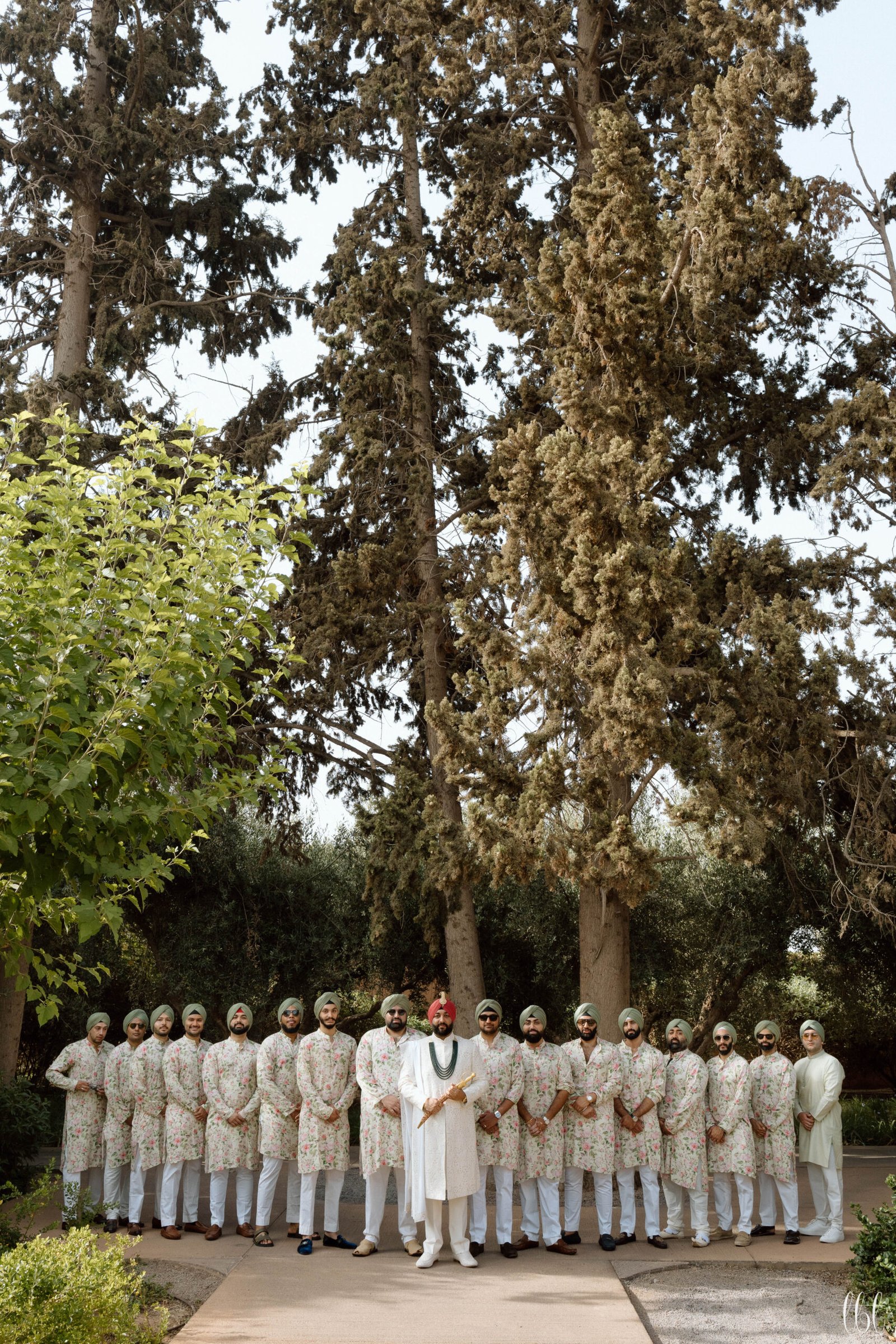
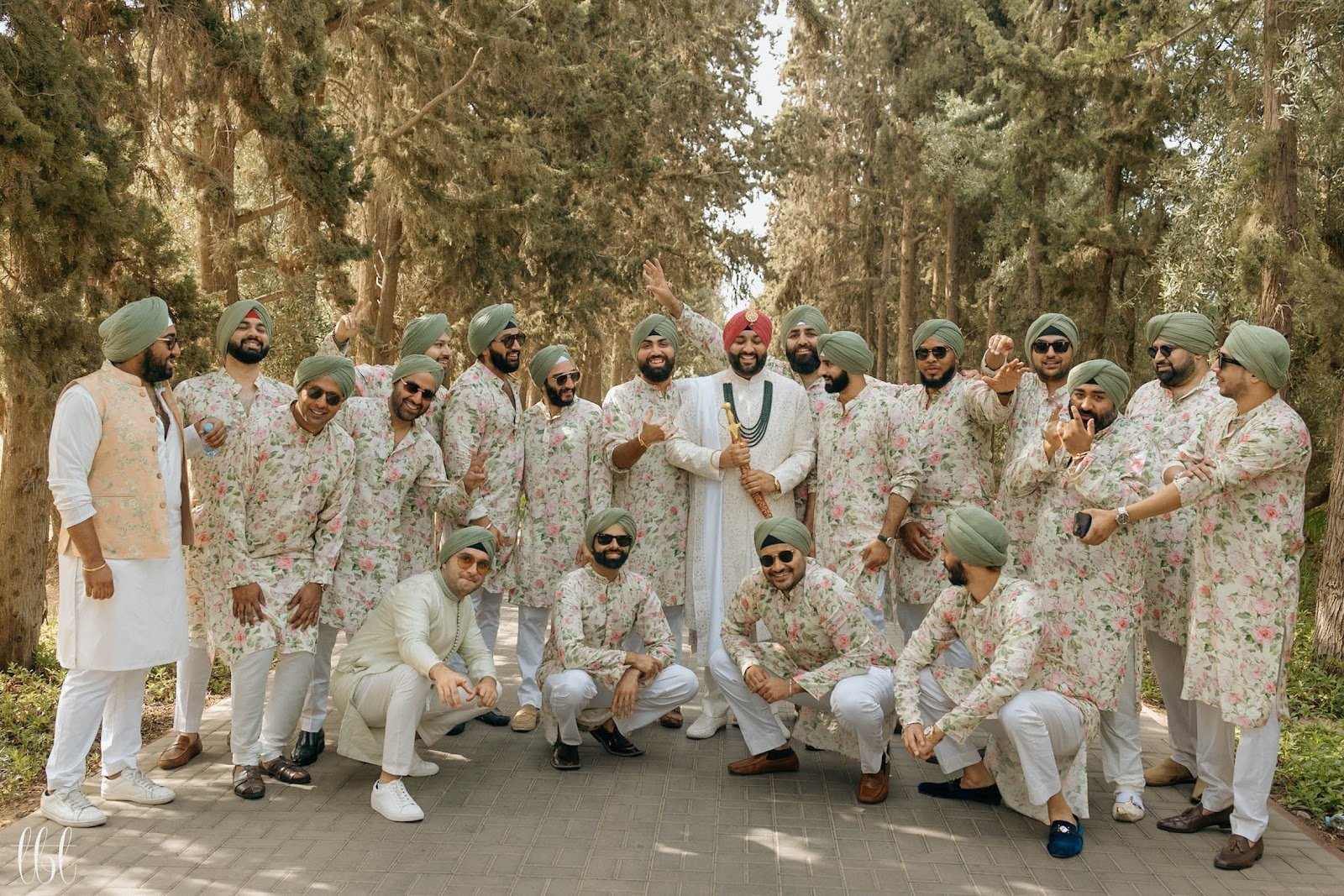
The bride typically wears a lehenga or salwar kameez adorned with intricate embroidery, paired with traditional jewelry like the chooda and kalire, while the groom dons a heavily embroidered sherwani with an elegant turban featuring a kalgi and carries a symbolic kirpan.
During moments like the milni, where families exchange garlands, and the doli, when the bride departs, the couple’s outfits reflect elegance and cultural heritage.
Rooted in Sikhism, these celebrations combine singing and dancing, luxurious attire, and timeless traditions, making Indian weddings truly remarkable.
Sikh wedding rituals
Sikh wedding rituals during the ceremony are deeply spiritual and culturally significant, reflecting the values of Sikhism in unity and love.
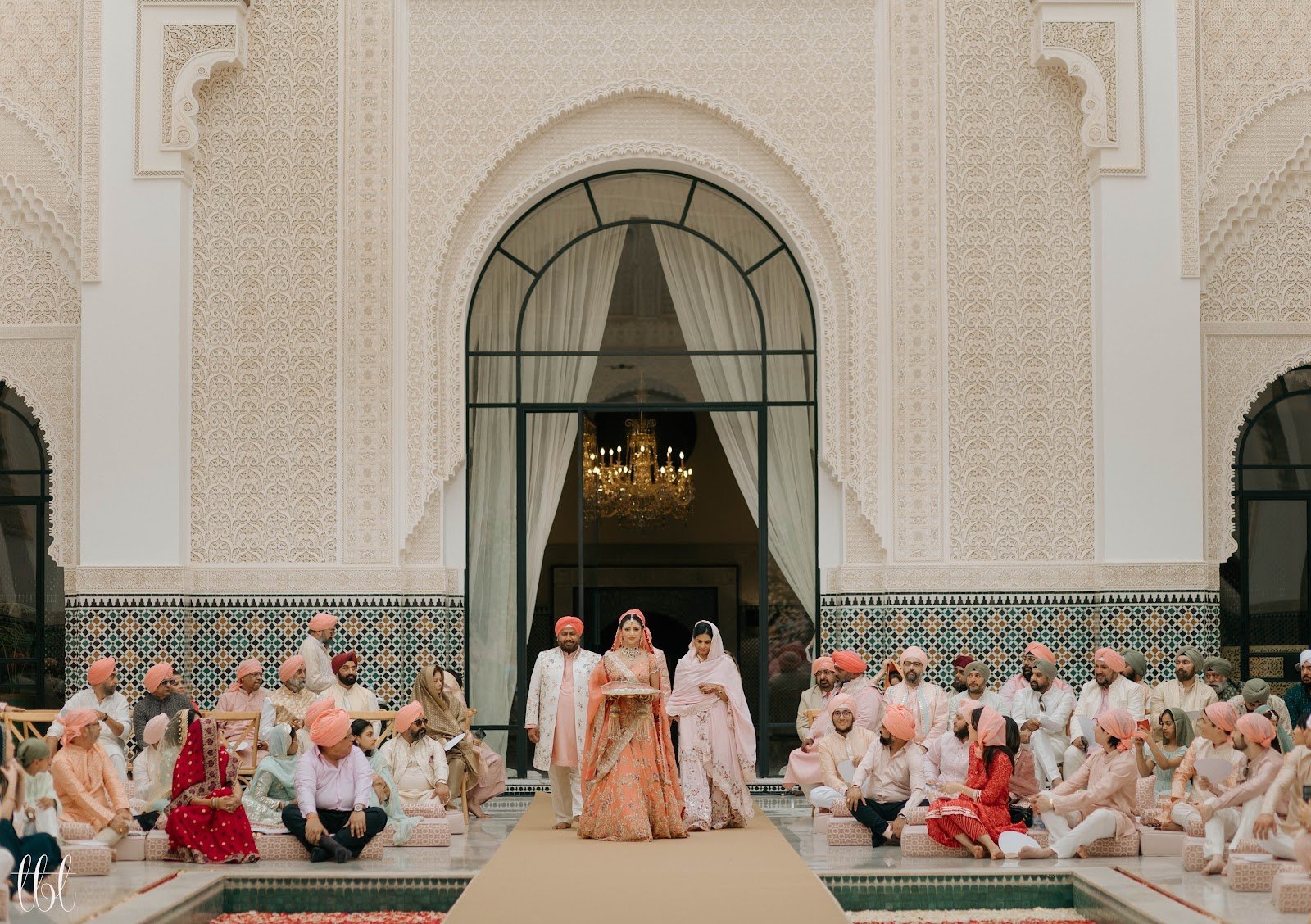
The day begins with the groom’s baraat, a festive procession to the gurdwara (Sikh place of worship), followed by the milni, where both families exchange garlands and gifts, symbolizing the union of two families.
The sacred Anand Karaj ceremony takes place at the gurdwara, with the couple performing four laavaan (circumambulations) around the Guru Granth Sahib Ji (the Sikh holy book) while sacred hymns (shabads) are sung.
Each round represents vows of love and faith, and the ceremony concludes with Anand Sahib prayers and the distribution of karah prasad (a sweet offering).
After the ceremony, the emotional doli marks the bride’s farewell as she departs with the groom to his home.
Every part of the wedding reflects Sikh traditions and emphasizes the importance of family, spirituality, and the sacred bond of marriage.
Sikh wedding rituals (section repeated on page)
Sikh wedding rituals during the ceremony are deeply spiritual and culturally significant, reflecting the values of Sikhism in unity and love.
The day begins with the groom’s baraat, a festive procession to the gurdwara (Sikh place of worship), followed by the milni, where both families exchange garlands and gifts, symbolizing the union of two families.
The sacred Anand Karaj ceremony takes place at the gurdwara, with the couple performing four laavaan (circumambulations) around the Guru Granth Sahib Ji (the Sikh holy book) while sacred hymns (shabads) are sung.
Each round represents vows of love and faith, and the ceremony concludes with Anand Sahib prayers and the distribution of karah prasad (a sweet offering).
After the ceremony, the emotional doli marks the bride’s farewell as she departs with the groom to his home.
Every part of the wedding reflects Sikh traditions and emphasizes the importance of family, spirituality, and the sacred bond of marriage.
Your precious moments with Hello Moments & Co
Post-wedding ceremonies in Sikh marriages are filled with emotional and cultural significance, symbolizing the bride’s transition into her new family and celebrating the union of the two families.
The Doli marks the bride’s farewell as she leaves her parental home to join her husband’s family, a moment filled with blessings and emotional goodbyes. The bride is welcomed into her new home with love and respect, symbolizing her acceptance as part of the family.
These ceremonies emphasize the values of Sikhism, focusing on family unity, spiritual connection, and the sacred journey of marriage.
Sikh and Indian weddings we have produced in Morocco
Every celebration below was designed and produced in-house by Hello Moments & Co.
- Mahek & Jaya timeless Sikh wedding at The Oberoi Marrakech. From the joyful pre-wedding celebrations to the sacred Anand Karaj, every chapter honoured their heritage.
- Sheffali & Nikhilthe first Indian wedding ever celebrated at The Ritz-Carlton Rabat, Dar Es Salam, across three days and one hundred and eighty guests.
- Rhea & SivaSouth Indian tradition at Ksar Char-Bagh, Marrakech.
For Hindu ceremonies, traditions and venues, read our guide to a Hindu wedding in Marrakech. To discuss your own celebration, talk to our team or explore our wedding planning services.
Choosing where to hold the Anand Karaj matters as much as the ceremony itself. Our guide to wedding venues in Marrakech covers the palaces, riads and hotels able to host a Sikh wedding.
The Anand Karaj, and the question of the gurdwara in Morocco
The Anand Karaj, which means the ceremony of bliss, is the heart of a Sikh wedding. It is performed in the presence of the Guru Granth Sahib, with the four laavan read and sung as the couple circles the Guru. Nearly every family asks the same first question when they imagine the day in Morocco: is there a gurdwara?
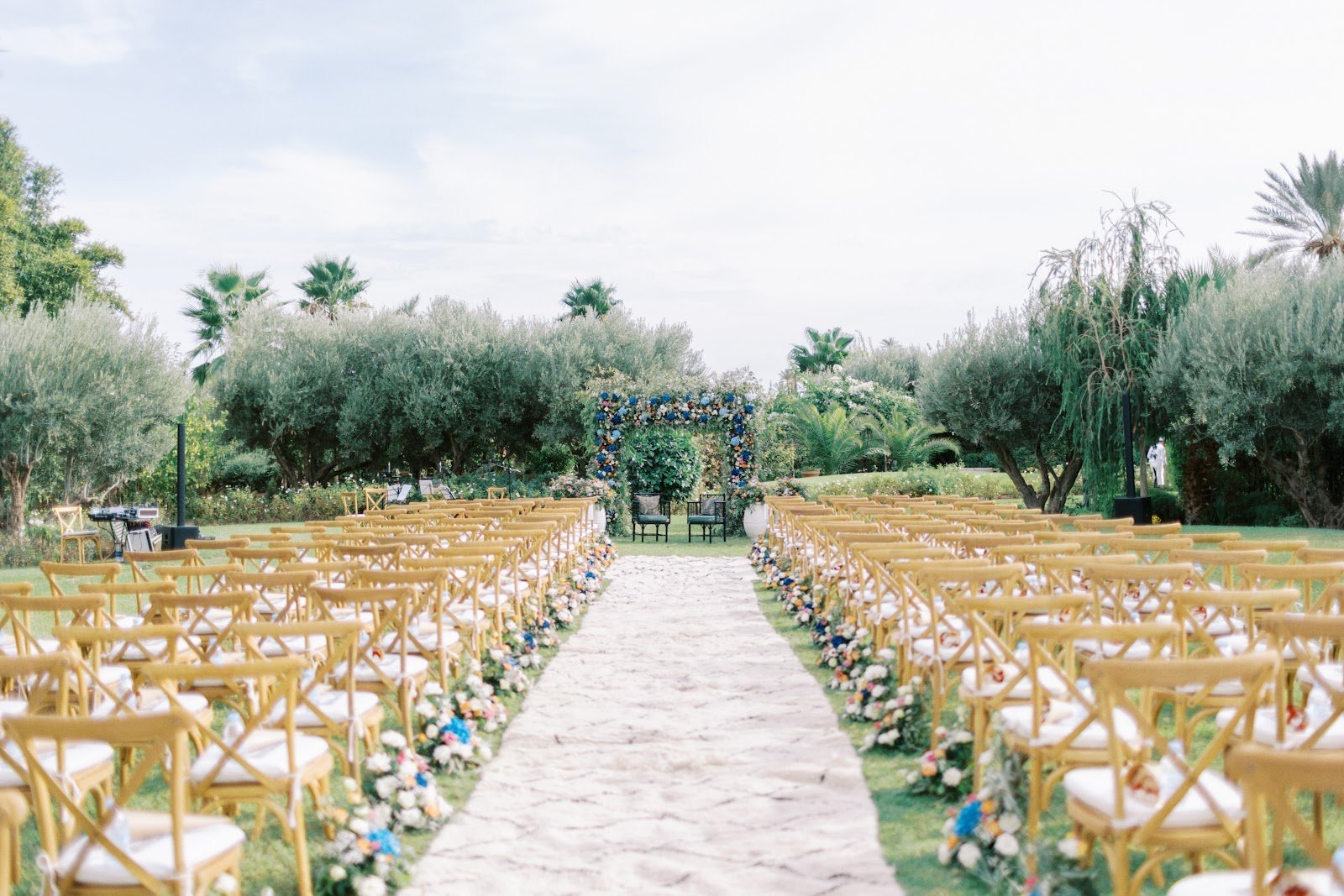
There is no resident gurdwara in Morocco. For a destination Anand Karaj, we create a sanctified space at your venue, a palace hall or a garden pavilion, where the Guru Granth Sahib is installed with full respect, a granthi officiates, and every point of maryada is observed. The ceremony is performed exactly as it would be at home, in a setting your guests will carry with them for years. It is a path we plan from end to end as your Indian wedding planner in Marrakech and Morocco.
The four laavan. The couple walks around the Guru Granth Sahib four times as each laav is sung, each circle a vow deeper than the last.
Milni and the baraat. The families meet, the groom arrives in procession with dhol and song, and the morning opens in colour before the ceremony settles into stillness.
Ardas and Kara Parshad. The closing prayer and the sharing of Kara Parshad bring the sangat together, before the celebration moves into the afternoon and the night.
Sikh weddings in Morocco, your questions
What is the Anand Karaj?
The Anand Karaj, the ceremony of bliss, is the Sikh marriage ceremony. It is performed before the Guru Granth Sahib, with the four laavan sung as the couple circles the Guru.
Is there a gurdwara in Morocco?
There is no resident gurdwara in Morocco. We create a sanctified space at your venue, with the Guru Granth Sahib installed with full respect and a granthi to officiate, observing every point of maryada.
How long does a Sikh wedding in Morocco take?
Most run over three to five days, from the Mehndi and the Maiya to the Anand Karaj, the reception and a farewell brunch.
Can we have a baraat and dancing?
Yes. The baraat can arrive by horse, by vintage car or through a lantern-lit courtyard, with dhol, and the celebration carries into the night.
Can you cater vegetarian and langar-style food?
Yes. We work with Indian chefs and trusted local kitchens for full vegetarian and langar-style menus, for an intimate gathering or several hundred guests.